Landowner Rights & Trail User Responsibilities

The Waskahegan Trail is a unique resource that exists only because of the generosity of landowners. Before you set foot on the trail:

  1. Know the landowner rights and the trail user responsibilities.
  2. Check the trail conditions

Snow Valley Hike

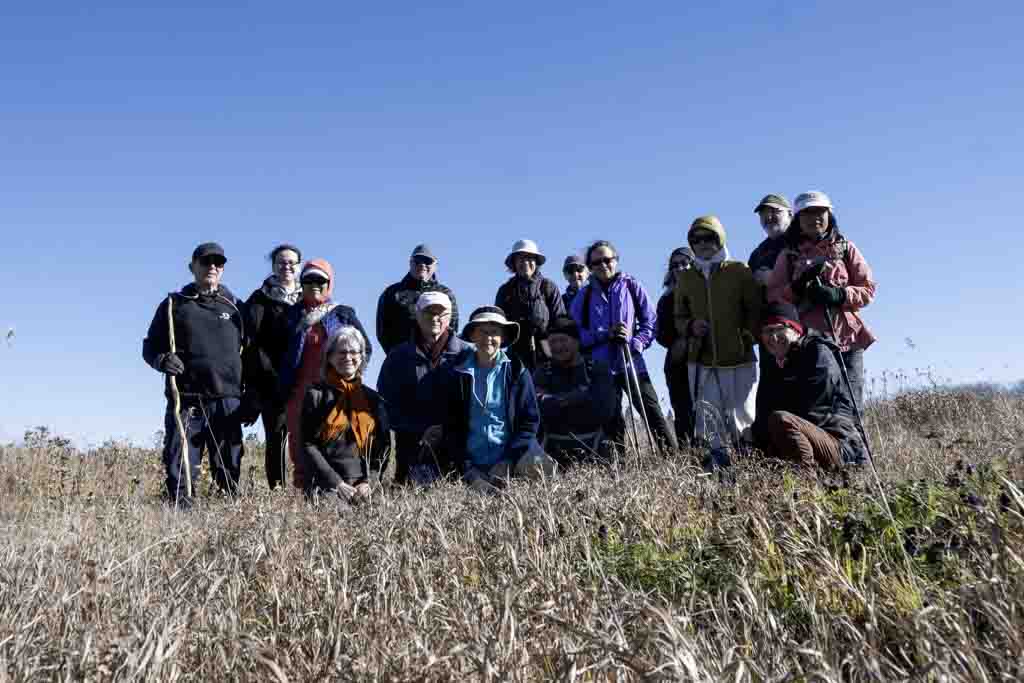
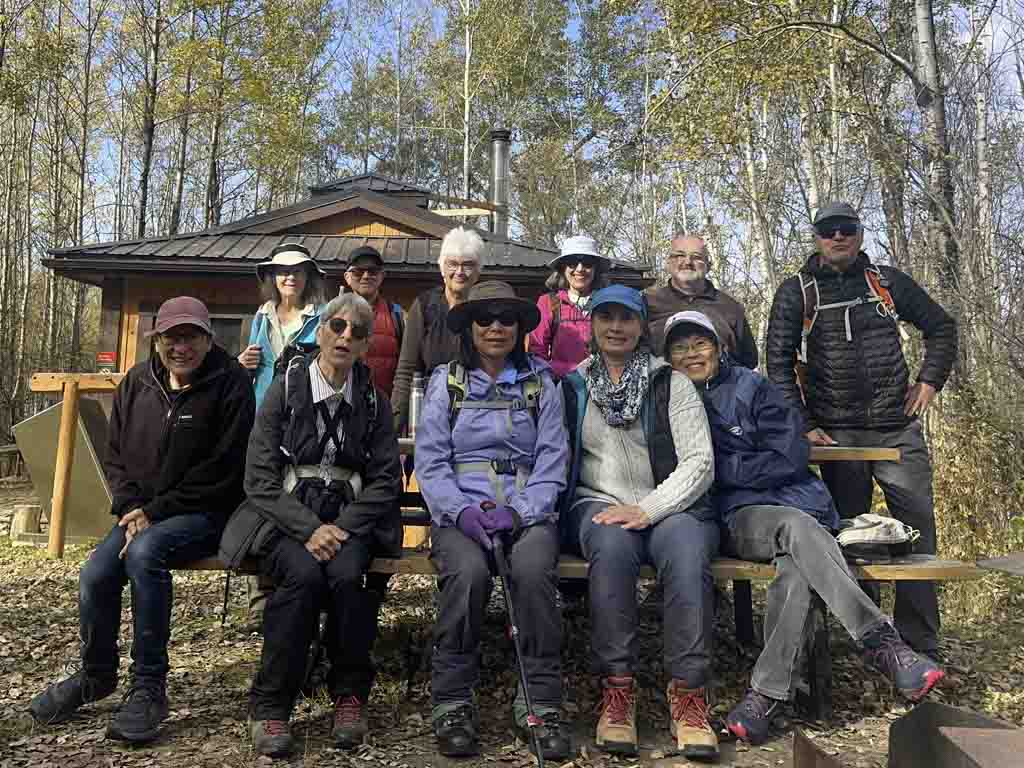
Eight hikers enjoyed a 12 km round trip hike on Sunday, from Snow Valley up to the loop around Fort Edmonton Park and the John Janzen Nature Centre, and back to Snow Valley. All eight hikers wore ice grippers and that was a smart move as the trail was covered in ice. We had sunny periods throughout the hike which we enjoyed very much.

We saw two of the ravine’s resident owls, one sitting in a hole in a tree, the other perched on a limb of a neighbouring tree.

The owls drew the attention of many, including people with really big camera lenses.

Circling above the owls was a murder of crows—eight in all. We couldn’t determine what was holding their attention—perhaps it was just a Sunday afternoon gathering!

We also saw many squirrels and chickadees, who seem to enjoy a good life in the ravine with the copious amounts of sunflower seeds placed on stumps and other spots.

Stella contributed to the collection of seeds with a homemade seed-tree which she hung in a small bush—a yummy treat for the chickadees.

Our rest stop, and later lunch, were at the Alfred Savage Centre, just south of the mouth of the Whitemud Creek. It was a good day for treats: ginger muffins, brownies, homemade fruit roll-ups and some peppermint chocolates were shared.

The hike was a bit longer than usual, but the weather and the company were pleasant, so it was an enjoyable day for all.

Thank you to everyone who came out on this day. Here are the photos on Flickr.

Where we’re going next.

Waskahegan Trail Association—Exceptional and Uncommon

The Waskahegan Trail was conceived in the spirit of celebration around the time of Canada’s centennial. If you were around, you might remember what it was like. We had Expo 67 in Montreal, a lot of new buildings1, and we even had a song contest.

Ideas were popping up all over.

In Edmonton, Fred Dorward proposed an idea to the Oil Capital Kiwanis group: Let’s build a hiking trail around Edmonton!

Recreation News, Recreation Branch, Alberta Department of Youth (Edmonton, Alberta, February 1968, Vol. 22)

The reaction was swift and enthusiastic. Support came from all over2 3. Government leaders together with members of the public formed a Regional Trails Committee. A few private landowners in the Leduc area granted their permissions and trail-building began.

On March 20, 1969, the Regional Trails Committee dissolved to make way for the Waskahegan Trail Association. The WTA held its first Annual General Meeting on May 22, 1969, and elected ten members to the board.

Uncommonly Successful

If not for the stewardship and services offered by the Waskahegan Trail Association, the Trail as we know it would cease to exist.

It takes people working together to coordinate volunteers, maintain public support, nurture landowner relations, and raise funds to sustain the Trail. And the Waskahegan Trail Association has been doing it for 55 years.

The fact that the WTA has thrived for that long is remarkable. An analysis of non-profits registered in Alberta reveals that only about 30% of organizations registered in the 1960s-1970s are still active.4

The WTA’s longevity comes down to two factors—the worthiness of the cause and the management of the organization.

The Cause

The Waskahegan Trail is both enduring and compelling. It’s enduring because we will always want to spend time in nature—even in spite of (or because of?) our world of continuous online entertainment and distractions.

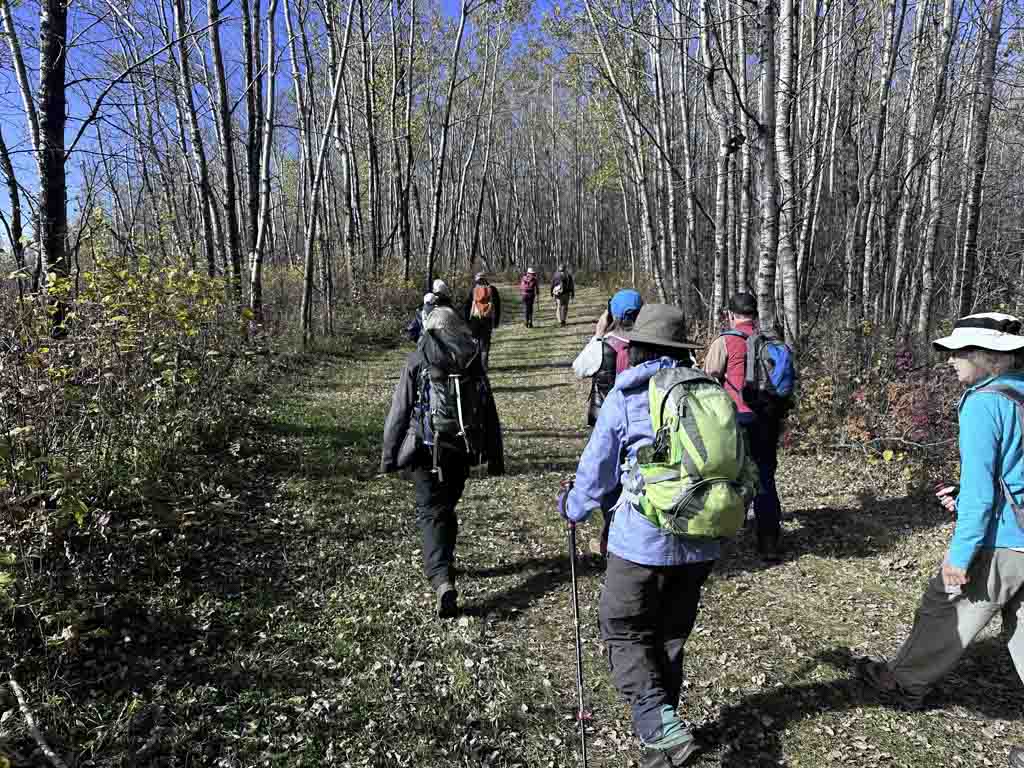
The Trail meets that demand by offering three unique experiences. You can take a self-guided walk in the country on an uncrowded path. You might enjoy working in a crew clearing and refreshing trail sections. And you might love sharing your experience of nature with others on our guided hikes. The social connection is a bonus.

Stoney Creek Trail Guided Hike, July 2025

Management Organization

WTA’s board of directors oversees the stewardship of the trail. The board has its eye on keeping the public’s trust, honoring relationships, complying with regulations, and ensuring commitments are met.

As the world evolves—socially, technologically, and regulatory-wise— the board helps the WTA keep up by constantly innovating, modernizing, and maturing.

Throughout January, we will introduce you to certain board roles and responsibilities with the hope that you will think about becoming a board member in April. Remember, members are welcome to attend our monthly online board meetings to check us out (just send an email to the president). The next meeting is January 15 at 7 p.m.

Next up – What the treasurer does.

Do you agree with this take? Are there other factors that help a nonprofit organization achieve longevity?


  1. Two big infrastructure projects in Edmonton were the Provincial Museum (now the Royal Alberta Museum in a new home), and the Centennial Library (renovated and rededicated as the Stanley Milner Library). www.edmonton.ca/city_government/edmonton_archives/1967-exhibit-city-projects ↩︎
  2. The Waskahegan Trail Guide Book, The Waskahegan Trail Association, Edmonton, Alberta. ↩︎
  3. See also our About page ↩︎
  4. The author did the analysis with the help of AI. Contact JoAnne if you would like to learn more. ↩︎