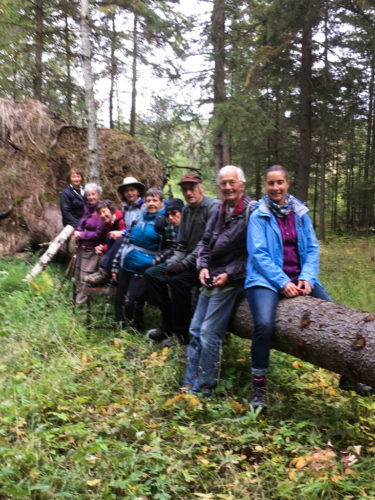
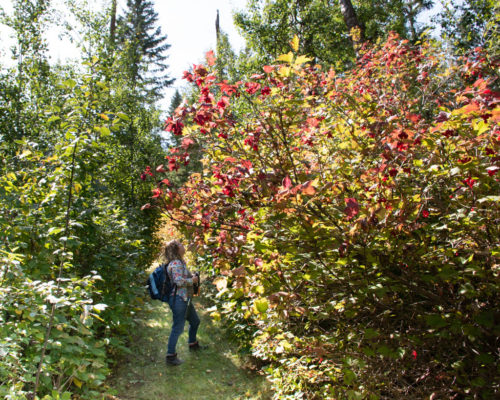
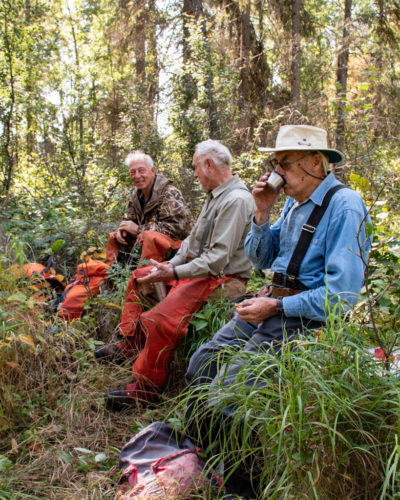
Seven people came out to clear the trail up to the south end of Miquelon Lake Provincial Park. The path was mowed, the boardwalk was cleared, and many old faded signs were replaced.
getting ready
mowing
signing
Once we reached the Blue Route, five of us went on to scout the trail into the park, skirting around Miquelon Lake #2. The shore around the lake is drier than it has been in previous years, so we were pleased to be able to walk on it without sinking. The walk along the western shore is simply stunning.
Showy Milkweed (Asclepias speciosa) has large rounded clusters of star-shaped pink or purplish flowers atop stems with lance-shaped leaves showing distinctive white veining. Softly greyish-hairy throughout; hollow stems with milky juice. The plant ontains “poisonous resinoids and cardiac glycosides” (Parish 249)
Oval-leaf Milkweed (Asclepias ovalifolia) is a related species—smaller, with more oval leaf shape and greenish-white flowers.
“Milkweeds are pollinated by insects that get little horseshoe-shaped pollen-carriers called pollinia clipped onto their legs as they enter the flower. They must break the pollinium free to leave. Some cannot and are trapped. The rest fly to other milkweeds, where the pollinia detach upon entry just at the right spot for fertilization. Smart flowers!” (Gadd, 339).
Monarch Butterfly Nursery
In southern Alberta*, this plant is part of a bigger design. The Eastern Monarch butterfly** lays its eggs (300 to 400 each) on the underside of milkweed leaves. As the larvae feed on the plants, they accumulate the poisonous glycosides, to which they are immune. Birds do not like the taste of these chemicals and therefore avoid eating the monarch larvae and butterflies. Declining occurrence of milkweed in North America directly impacts this beautiful insect (Nature Conservancy, 13; Parish, 249).
* Monarchs are most common in Alberta near the U.S. border where milkweed is abundant, but they have been seen as far north as Edmonton (CBC).
**The Eastern Monarch ranges from Alberta to the Maritimes and winters in Mexico. Western Monarchs occur in British Columbia and migrate to coastal California in winter.