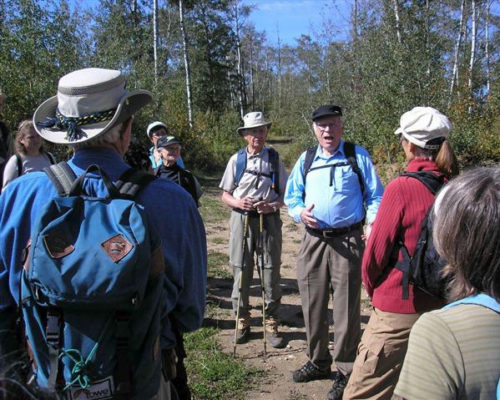
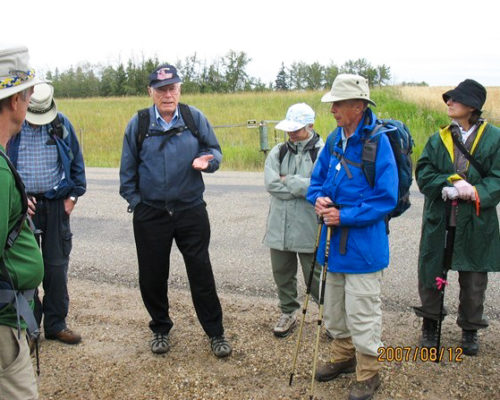
A big concern of people who are new to winter hiking is “What do I wear on my feet?”
And who can best answer that question? Seasoned hikers!
We’re not going to tell you the best boots to buy, because we wouldn’t dare. Instead we’ll give you our best tips that come from years of “research” and knowledge.
And you’re going to discover that it’s not all about the boots.
Warmth and fit
So, do you actually need “winter” hiking boots? That’s up to you.
Some hikers wear the same boots year-round. Others have boots in a size or half-size larger to accommodate extra socks.
But when you buy hiking boots—for any season—use this tip from the University of Alberta’s Mountains 101 course. Pull out the foot-bed from the boot, place it on the floor, and step down on it. If your foot doesn’t fit neatly on the foot-bed, the boot does not fit.
Grips…spikes…cleats
A 2016 Canadian study found that very few “anti-slip” boots are effective on ice. (You can check the rating of several brands at ratemytreads.com.)
We believe every person who lives on the prairies should have an ice-gripping product that fits on the bottom of their boots. To find products that stand up to hikes and long walks, visit stores like Campers Village (Waskahegan members get 10% off), workwear stores, and Canadian Tire. There are many sturdy solutions in a wide price range that pull on or strap on.
Waskahegan member Jim Wilson adds, “I have been operating with leather hiking boots insulated with Thinsulate—this is my year-round choice. For winter I install 6 screw-in cleats per boot. It gives better security on hard pack.
“They are a little funny on pavement…and stay out of the house!”
 Gaiters
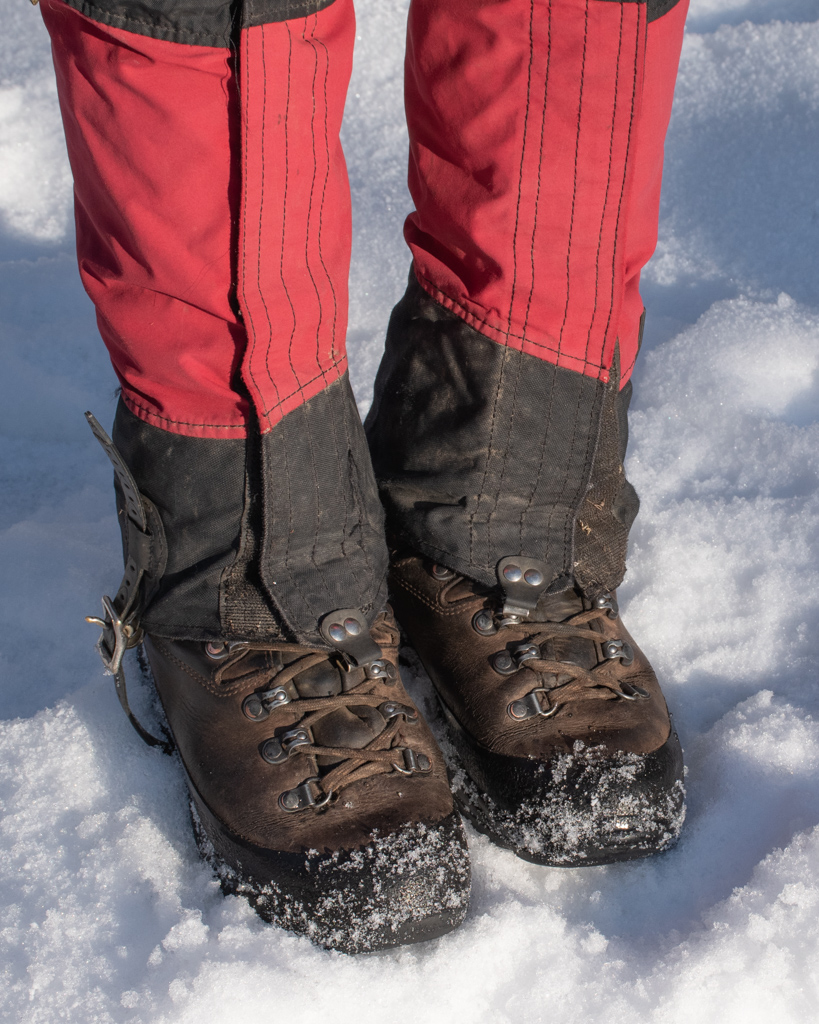
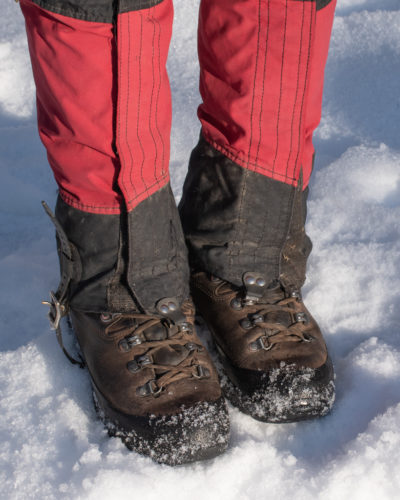
Even “waterproof” boots can get wet inside through snow accumulating on top of your boots.
Gaiters not only keep the moisture out of your boots, but they keep the lower half of your pants protected from snow and slush.
We wear our gaiters on hikes all year round, as they keep us clean and dry from wet grass and mud.
Socks
Hiking socks must be made of a moisture-wicking material, like wool or nylon.
Cotton is trouble, as it holds moisture and keeps your feet damp.
Wet boots
A former member, Marilyn Bourassa, told us she had spent a Saturday at trail maintenance in a boggy area and soaked her boots right through. That evening she tore up sheets of newspaper, balled them up, and packed the balls tightly into her soggy boots. The next morning, she pulled out the balls. Her boots were perfectly dry for wearing to the Sunday hike that morning.
I’ve used this technique—paper plus pressure—many times to dry out boots. It always works.
We believe that everyone would enjoy winter more if they had the right gear. For winter hikes and long walks on local trails, your safety and comfort start with the feet. If you find these tips useful, go ahead and hit one of the share buttons below.